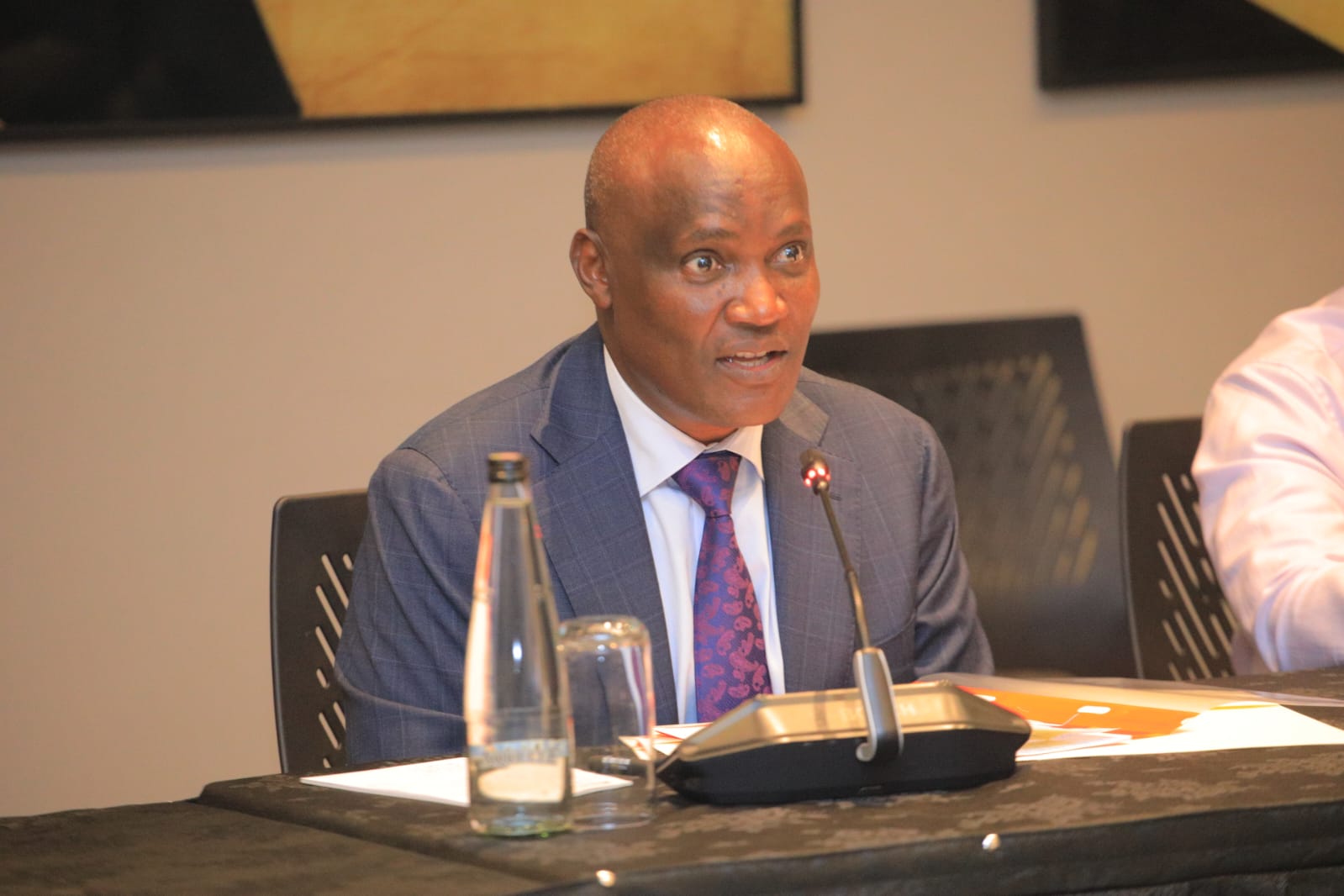
The National Treasury has assured Parliament that the proposed Field Development Plan (FDP) for Blocks T6 and T7 will not pose any direct or hidden risk to Kenya’s public debt, even as the project comes with combined fiscal concessions totaling Sh. 173 billion.
Treasury Cabinet Secretary John Mbadi told lawmakers that the initiative is expected to generate substantial revenues for the State, depending on international oil prices, and will provide both economic and social benefits.
Speaking to members of the National Assembly and Senate Committees on Energy, Mbadi said, “The Government of Kenya stands to earn between USD 1.05 billion (at USD 60/bbl) and USD 2.9 billion (at USD 70/bbl), equivalent to Sh. 136–371 billion over the Project’s life. Direct Government revenues expected to come from profit oil split, Government participation.”
Mbadi further outlined projected gains for State agencies, noting, “KPRL is projected to earn Sh. 42.3 billion (USD 325 million) in storage and handling revenues, while KPA will gain Sh. 41.9 billion (USD 322 million) from the New Kipevu Oil Jetty.”
He highlighted the wider economic and social impact, adding, “It is expected to generate over 3,000 direct, indirect, and induced jobs, contributing to PAYE and social security revenues. Communities along the project corridor will benefit from improved market access, infrastructure, and local business growth.”
The Treasury CS provided a detailed breakdown of the Sh. 173 billion in combined fiscal concessions under the proposed Project Specific Fiscal Terms (PSFTs), which total USD 1.331 billion (Sh. 173.03 billion).
These include Value Added Tax (VAT) Upstream of USD 269 million, Withholding Tax (WHT) Upstream of USD 58 million, Revolving Demand Loan (RDL) and Import Duty of USD 32 million, and Harmonisation at USD 972 million.
Mbadi explained, “Therefore, the combined fiscal concession during importation of materials for construction and upon sale of oil amounts to USD 1,331 million and there are no concessions sought by the Contractor on the share of revenue from the sale of crude. The crude oil shall be marketed jointly.”
On legal compliance for tax concessions, he emphasized, “Matters of fiscal concessions sought in the Future Dated Payment (FDP) shall be guided by the applicable laws. Article 210 of the Constitution provides that no tax or licensing fee may be waived, varied, or exempted except as provided by legislation.”
Addressing concerns over public debt exposure, Mbadi reiterated, “The Future Dated Payment (FDP) does not create any explicit or implicit public debt obligation for the Government.
The financing of exploration, development, and production activities remains solely the responsibility of the contractor under the PSC framework. There is therefore no impact on Kenya’s public debt arising from the implementation of the FDP.”
He also explained safeguards built into the Production Sharing Contracts (PSCs) to manage risk: “The PSC structure provides important risk mitigation measures including cost recovery ceiling, ring-fencing of costs, strict approval of work programmes and budgets, audit rights, and phased development tied to commercial viability.”
On the handling of oil revenues, Mbadi affirmed, “Oil revenues accruing to the Government under the PSCs will be treated as non-tax revenue and paid into a dedicated petroleum fund in line with Section 57(2) of the Petroleum Act. Cap 308 and managed in accordance with Public Finance Management Act, 2012 and any other relevant law.”
The Treasury’s briefing signals a strong focus on legal compliance, risk mitigation, and transparent management of revenues, positioning the FDP as a potentially transformative project for Kenya’s energy sector and broader economy.































Comments
Sign in with Google to comment, reply, and like comments.
Continue with Google